


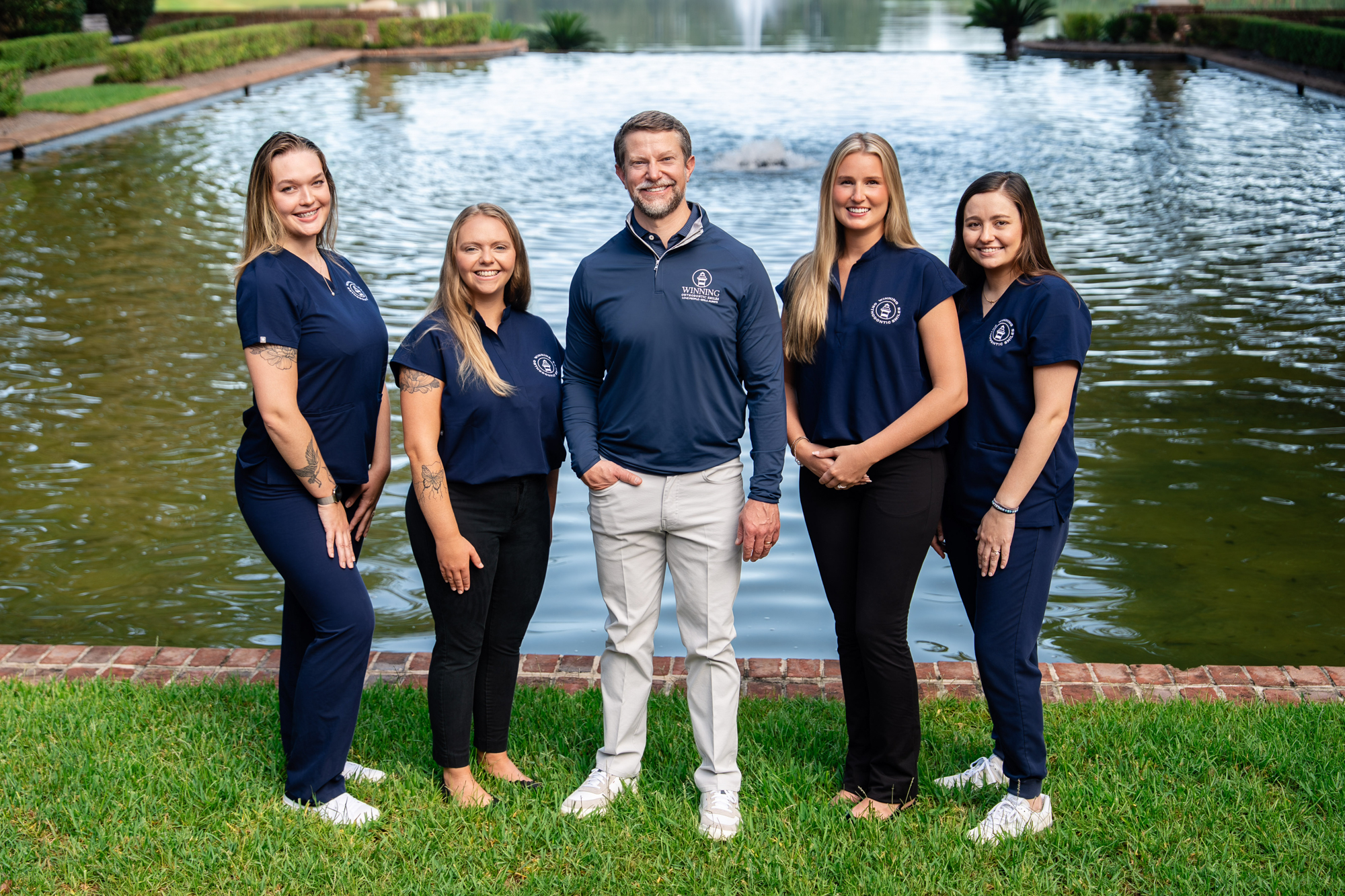
When should your child see an orthodontist? It’s a question parents ask us often, and the answer is earlier than most expect. The American Association of Orthodontists recommends an early orthodontic evaluation by age 7, long before most kids need braces. At Winning Orthodontic Smiles, this early check-in helps us spot small issues before they grow into bigger ones.
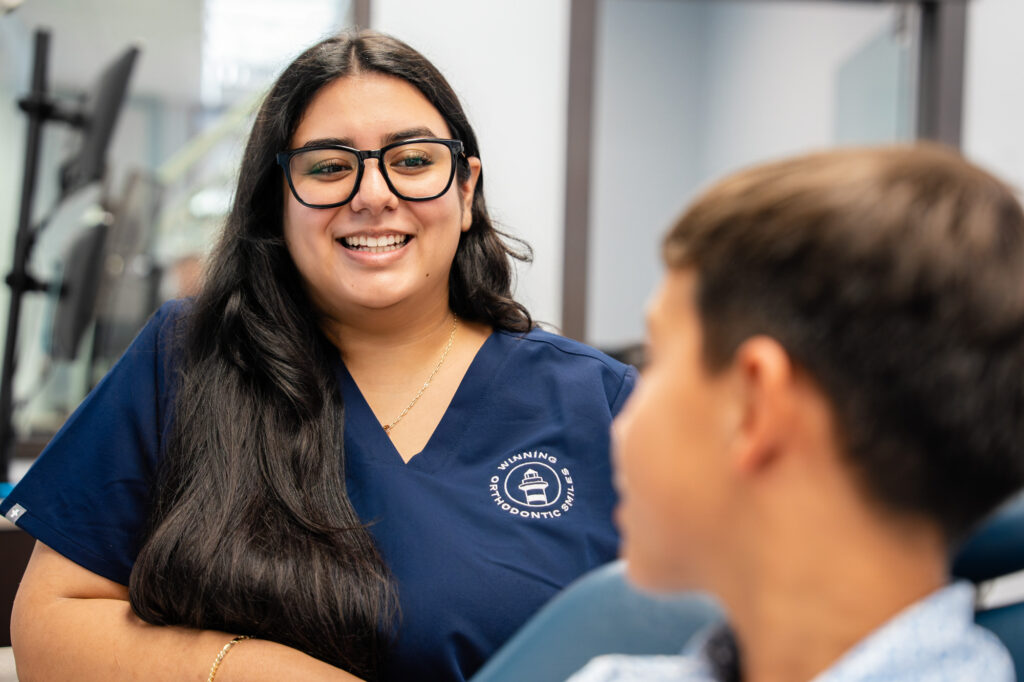
What Is an Early Orthodontic Evaluation?
An early orthodontic evaluation is a developmental check-up for your child’s teeth, jaw and bite, typically recommended by age 7. It’s not a sign your child needs braces. It’s a chance for a trained specialist to see how everything is growing and whether any patterns need attention down the road.
Age 7 works well for a reason. Your child has a mix of baby and permanent teeth at this stage, which gives us a clear window into how the bite is developing. The first permanent molars have usually come in, establishing the back-of-mouth alignment that shapes the rest of the smile. We can see things now that we simply couldn’t see earlier, and that we’d rather catch now than years later.
At Winning Orthodontic Smiles, these first visits are a complimentary consultation. There’s no pressure and no commitment, just honest information about where your child stands. Dr. Travis Fiegle, Dr. Katie Solomon and Dr. Gavin Fox are all board certified by the American Board of Orthodontics, and they use these appointments to educate families and build a plan, whether that plan involves treatment next month or simply a check-in next year.
How the Early Evaluation Process Works
Your child’s first visit is designed to be welcoming and low-stress. Here’s what to expect, step by step:
- Welcome and paperwork. Our team greets you, reviews your child’s dental and medical history and answers any questions about the day.
- Visual exam. The orthodontist looks closely at your child’s teeth, jaw position, bite alignment and facial development. This part is quick and comfortable.
- Digital imaging if needed. We may take X-rays or digital scans to see what’s happening below the gumline, including unerupted teeth and jaw structure. These images help us catch things the naked eye can’t.
- A conversation about findings. The orthodontist walks you and your child through what they saw, using plain language. We’ll show you the images and point out anything worth noting.
- Recommendation and next steps. Based on the exam, there are three possible outcomes. We’ll either give the all-clear, suggest monitoring with periodic check-ins or recommend starting Phase 1 treatment.
Dr. Travis Fiegle, Dr. Katie Solomon and Dr. Gavin Fox take time to make sure parents leave with real understanding, not confusion. If treatment isn’t needed yet, you’ll know exactly what to watch for and when to come back. If it is, you’ll have a clear picture of why, what’s involved and what the timeline looks like.
Benefits of Early Orthodontic Evaluation
An early evaluation gives you information. And when it comes to your child’s growing smile, information matters. Here are the biggest benefits parents see:
- Guides jaw growth while bones are still developing. Young bones are more responsive to gentle correction. Addressing a narrow upper jaw or forward lower jaw at age 8 is often easier than waiting until the teen years.
- Creates space for incoming permanent teeth. If we can see that permanent teeth won’t have room, we can sometimes expand the arch or guide eruption, which may reduce the need for extractions later.
- Addresses harmful oral habits early. Thumb sucking, tongue thrusting and mouth breathing can shape the bite in ways that are harder to reverse once they’re set. Catching them early matters.
- Can shorten or simplify future treatment. When Phase 1 interceptive work is done well, the braces phase in the teen years is often shorter and more straightforward.
- Catches bite issues before they worsen. Crossbites, underbites and open bites tend to become more entrenched with age. Spotting them at 7 gives us options we lose at 14.
- Gives parents a clear timeline and peace of mind. Even if the answer is “wait and watch,” you’ll know what to expect and when. No more guessing whether you’re missing something important.
The goal isn’t to put every child in braces early. It’s to make sure no child misses the window when early action would have made a real difference.
Phase 1 vs. Phase 2: Comparing Early and Full Treatment Timing
Not every child who gets an early evaluation needs Phase 1 treatment. In fact, many kids skip straight to Phase 2 in their preteen or teen years. Here’s how the two phases compare:
| Feature | Phase 1 (Interceptive) | Phase 2 (Full Treatment) |
|---|---|---|
| Typical ages | 7 to 10 | 11 and up |
| Primary goal | Guide jaw growth and create space | Align all permanent teeth and finalize bite |
| Dentition | Mix of baby and permanent teeth | All or nearly all permanent teeth |
| Common appliances | Palatal expanders, space maintainers, partial braces | Metal braces, clear braces, Invisalign and Spark |
| Duration | Usually shorter, often 6 to 12 months | Typically 12 to 24 months |
| Who needs it | Children with specific developmental issues | Most teens seeking full bite correction |
Phase 1 is interceptive, meaning it steps in during a growth window to shape what’s coming. Phase 2 is the phase most people picture when they think of braces, when every permanent tooth gets moved into its ideal spot.
At Winning Orthodontic Smiles, early treatment is one part of our orthodontic care for children, teens and adults. When it’s time for Phase 2, families can choose from metal braces, clear braces or Invisalign and Spark clear aligners. For families who complete Phase 1 with us, we build a bridge straight into Phase 2 when the time comes, with no restarting from scratch.
Signs Your Child Needs an Orthodontic Evaluation
Even before age 7, certain signs are worth watching for. If you notice any of the following, go ahead and schedule a complimentary consultation sooner rather than later:
- Difficulty biting, chewing or speaking clearly. If meals are frustrating or certain sounds are hard to form, the bite may be part of the picture.
- Crowded, blocked-out or crooked teeth. Teeth that look jammed together or are growing in the wrong spots usually need a specialist’s eye.
- Early or late loss of baby teeth. Baby teeth that fall out before age 5 or hang on well past age 7 can disrupt the eruption of permanent teeth.
- Visible bite problems. Overbite (top teeth stick out), underbite (bottom teeth sit in front), crossbite (upper and lower teeth don’t meet correctly) or open bite (front teeth don’t touch when biting down) all deserve attention.
- Mouth breathing or jaw shifting. If your child breathes through their mouth most of the time, or if their jaw clicks or shifts to one side when opening and closing, these can signal structural issues.
- Prolonged thumb or finger sucking. Habits that continue past age 5 can start to reshape the roof of the mouth and the position of the front teeth.
If none of these apply, the age-7 check-up is still worth doing. Many issues we catch early don’t show obvious outward signs. That’s exactly why the evaluation exists.
Frequently Asked Questions
Can a 7-year-old go to the orthodontist?
Yes, and it’s actually the age the American Association of Orthodontists recommends for a first evaluation. At 7, your child has enough permanent teeth for us to assess how the bite is developing, but still enough growth ahead to make early correction effective if it’s needed. The visit is relaxed and informational, not a commitment to braces.
Does my child need a referral from their dentist?
No referral is needed. You can schedule a complimentary consultation with Winning Orthodontic Smiles directly. Many families come to us on their dentist’s suggestion, but just as many book on their own after noticing something or hitting that age-7 milestone. Either path works.
What happens at the first visit?
The first visit covers paperwork, an exam, any imaging your child needs and a conversation with the orthodontist about what we found. We never rush this visit because the conversation at the end is often the most valuable part for parents.
Will my child definitely need braces later?
Not necessarily. An early evaluation is a check-up, not a prescription. Many children we see at 7 don’t need any treatment at all, and plenty of others only need monitoring. Even for kids who do eventually get braces, knowing early means better timing and often easier treatment.
What happens if we wait too long?
Some orthodontic issues become harder to correct once the jaw stops growing in the mid-teen years. Problems that could have been guided with a simple appliance at age 8 may require more involved treatment, and in some cases oral surgery, if addressed in adulthood. Early evaluation keeps the full range of options open.
Is Phase 1 treatment uncomfortable for young kids?
Most children adjust quickly to Phase 1 appliances. There may be a brief adjustment period of a few days when something new is placed, but kids are remarkably adaptable. Our team walks every family through what to expect so there are no surprises.
Schedule Your Child’s Complimentary Consultation
Your smile. Our passion. That promise extends to every child who walks through our doors, no matter how young. If your little one is approaching age 7, or if you’ve noticed any of the signs above, we’d love to meet your family and give you the clarity you’re looking for.
Our orthodontists are proud to serve families across the Lowcountry with a winning experience from the very first visit, and we’ve earned multiple community awards along the way. We work every day to keep that trust by giving each child the winning smile they deserve.
Ready to take the next step? Choose the office nearest you:
- Our Beaufort office on Ribaut Road
- Our Bluffton orthodontic office on Buckwalter Parkway
- Our Hilton Head Island office on Main Street
- Our Walterboro orthodontic office on Bells Highway
You can also request an appointment online. We look forward to meeting your family and helping your child start strong.