


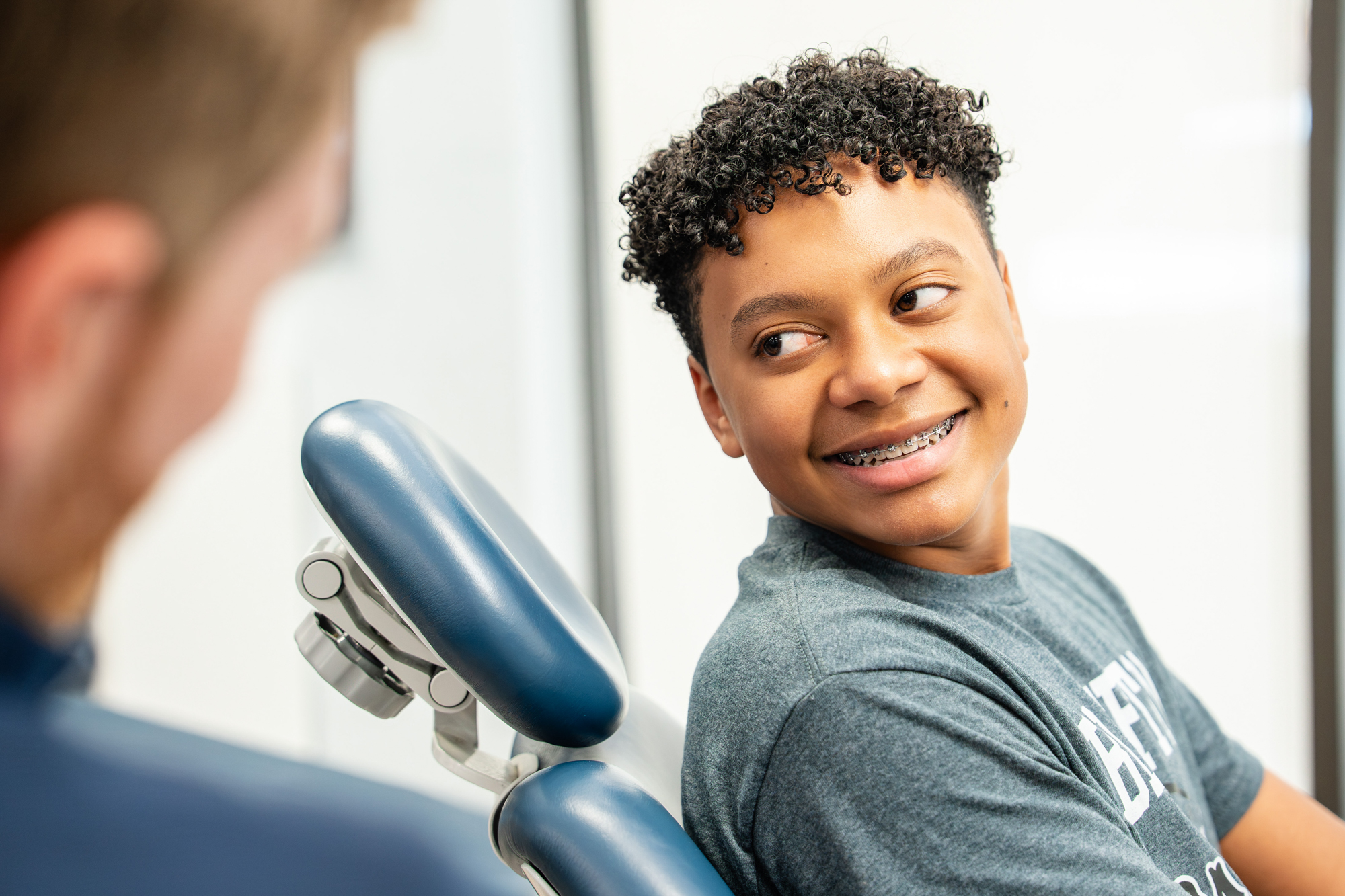
If you are weighing braces or clear aligners for your teenager, you are not alone. Most Lowcountry parents want the same three things: a healthy bite, a winning smile, and a treatment plan that fits real life. This guide walks you through the options, the timeline, and what to expect, so you can make a confident decision for your family.
Your teen’s schedule is already full. School, sports, band, jobs, and social plans all compete for attention. The good news is that today’s orthodontic care is more flexible, more aesthetic, and more teen-friendly than ever. Here is what parents most often want to know.
Why the Teen Years Are the Best Window for Treatment
Most orthodontists begin active treatment between ages 10 and 14. That window matters. Permanent teeth are usually in place, and the jaw is still growing, which gives us the best chance to guide alignment and correct bite issues before growth slows.
The American Association of Orthodontists recommends every child receive an orthodontic evaluation by age 7. Early evaluation does not always mean early treatment. It simply gives your orthodontist a baseline to monitor development and time care correctly.
There is also a social side. Teens who feel good about their smile often carry that confidence into class presentations, team photos, and prom. And because teens follow school-day routines, compliance with brushing, aligner wear, and appointments tends to be strong.
Common Orthodontic Concerns in Teens
Many families first hear about a possible concern from their pediatric dentist. The issues we see most often include:
- Crowding, when teeth do not have enough room to sit straight
- Spacing or gaps between teeth
- Overbite, underbite, crossbite, or open bite
- Impacted, missing, or extra teeth
- Jaw alignment concerns that can affect chewing, speech, or jaw comfort
If any of these sound familiar, it helps to understand what a misaligned bite can lead to when it goes uncorrected. A complimentary consultation is the simplest next step. You will get a clear picture of what is happening and whether treatment makes sense now or later.
Treatment Options for Teens: Braces, Clear Braces and Invisalign Teen
Most teens today choose between three main paths. Each has real strengths, and the right fit depends on the correction needed, your teen’s personality, and daily habits.
Traditional metal braces are the most versatile option in orthodontics. Metal brackets and archwires handle nearly every type of correction and they are durable enough for a full season of sports. Wild Smiles braces add a fun twist with shaped brackets, because sometimes you want to turn correction into expression.
Clear braces use tooth-colored brackets that blend in. They are a strong pick for image-conscious teens who want a lower-profile look while still getting the reliability of fixed braces.
Invisalign Teen uses a series of removable clear aligners. Teens can eat what they want and brush normally, and blue compliance indicators help parents and doctors track wear time. Clear aligners work best when worn 20 to 22 hours a day, so this path rewards responsibility.
| Option | Visibility | Removable | Typical Duration | Best For |
|---|---|---|---|---|
| Metal braces | Visible | No | 12 to 24 months | Most corrections, active teens |
| Clear braces | Subtle | No | 12 to 24 months | Image-conscious teens |
| Invisalign Teen | Nearly invisible | Yes | 12 to 24 months | Mild to moderate cases, responsible wearers |
If you want to go deeper on the trade-offs, we have a full breakdown of how the three options compare side by side.
An Honest Word About Aligner Compliance
Aligners only work when they are in your teen’s mouth. That sounds obvious, and it is still the single biggest reason clear aligner cases run long. Twenty to twenty-two hours a day means the trays come out for meals and brushing and go straight back in.
Some teens handle that without a second thought. Others genuinely do better with something fixed to their teeth that works whether they remember it or not. Neither answer is a character judgment, and there is no wrong choice here. Be honest with us about your teen at the consultation and we will steer you toward the option that will actually finish on time.
What to Expect, From Consultation to Retainer
Most teen treatment plans run 12 to 24 months. Some cases finish faster and more complex bites take longer. Here is what the path looks like from start to finish.
- Complimentary consultation and digital scan. We examine your teen’s teeth and bite, talk through goals, and capture a quick digital scan. No messy impressions.
- A custom treatment plan. Your orthodontist maps out the movements and walks you through the options that fit the case, along with a realistic timeline.
- Active treatment. Checkups every 4 to 8 weeks for adjustments or new aligner sets. Visits are short and easy to fit around school.
- Retention. Once teeth are in position, retainers hold them there while everything settles.
Many dental plans include an orthodontic benefit for dependents, though coverage varies from plan to plan. Bring your insurance details to the consultation and our team will review your benefits with you before anything begins. You can find new patient information and forms ahead of your first visit.
What to Look for in a Teen Orthodontist
Treating teenagers is its own skill. The clinical work is one part of it, and the other part is an office that understands a sixteen-year-old’s schedule and talks to them like a person. Here is what actually matters:
- Board certification and years focused specifically on orthodontics
- Real depth of experience with teenage patients, not just children and adults
- A full range of options on the table, including metal, clear, Invisalign Teen, and Wild Smiles
- Appointment flexibility that works around school and practice schedules
- A team that answers questions plainly and does not rush the consultation
Dr. Travis Fiegle is certified by the American Board of Orthodontics, and he is the only board-certified orthodontist who both practices and lives in Beaufort County. Alongside Dr. Katie Solomon and Dr. Gavin Fox, he has spent years helping Lowcountry families find the option that fits.
A few good questions to bring with you: What options are appropriate for my teen? How long will treatment take? What happens if a bracket breaks or an aligner is lost? How do you handle appointments during exam weeks and sports seasons?
Orthodontic Care for Beaufort’s Military Families
Beaufort is a military community, and orders do not wait for treatment plans. If your teen is mid-treatment when new orders come through, planning ahead keeps progress on track.
A few things worth doing early:
- Share your expected tour length at the first visit, so your orthodontist can time the treatment plan realistically
- Ask how records are transferred, so a new provider can pick up exactly where treatment left off
- Confirm your TRICARE dental coverage details before starting, since orthodontic benefits vary by plan and by dependent age
- Ask how remaining aligner sets would be handled if you move partway through
If a move is on the horizon, tell us at the consultation rather than after treatment starts. It changes how we sequence the plan, and it is far easier to build around a PCS than to work backward from one.
Life With Braces or Aligners: Sports, School and Lowcountry Living
Braces do not sideline your teen. A properly fitted mouthguard protects brackets and lips during football, lacrosse, soccer, and any contact sport. Aligners come out for games and go right back in after.
Wind and brass players, this one comes up a lot: there is usually an adjustment period of a couple of weeks while your embouchure adapts to brackets, and orthodontic wax helps a great deal during it. Marching band season and braces coexist just fine.
A few practical tips:
- Pack a small kit for school with a travel toothbrush, floss picks, wax, and an aligner case
- Avoid sticky, hard, or chewy foods with fixed braces, so caramels, ice, and hard rolls are out
- Rinse aligners with cool water after meals, never hot
- Humidity and salt air are fine for appliances, but rinse after a day at the beach or on the boat
- Keep aligners in their case at summer camps and sleepovers, because a napkin at lunch is where most of them go missing
After Treatment: Retainers and Long-Term Results
Retention is what protects the winning smile your teen just earned. Teeth naturally want to shift, and retainers hold them in place while bone and tissue settle.
Your teen may receive a fixed retainer bonded behind the front teeth, a removable retainer, or both. Wear schedules usually start full-time and taper to nights only. Sleep in the retainer every night and the results hold.
Before college, we do a final check and often send a spare retainer along. Life away from home is a lot easier when a replacement is already in the drawer.
Frequently Asked Questions About Teen Orthodontics
What age should my teen see an orthodontist?
The American Association of Orthodontists recommends an evaluation by age 7, though most active treatment happens between ages 10 and 14. It is never too late for a consultation. Older teens and adults are treated successfully every day, and orthodontic treatment works at nearly every stage of life.
How long does teen orthodontic treatment take?
Most teen cases run 12 to 24 months. Mild crowding or spacing can finish on the shorter end, while bite corrections and rotated teeth usually take longer. Consistency matters too, since skipped elastics and unworn aligners add months. Your orthodontist will give you a personalized estimate after examining your teen.
Can my teen play sports or a wind instrument with braces?
Yes to both. A custom or boil-and-bite mouthguard protects the appliances and the mouth during contact sports, and aligners simply come out during play. Wind and brass players typically need a week or two to adjust, and orthodontic wax smooths the transition.
Is Invisalign Teen a good idea for teenagers?
It can be an excellent choice for mild to moderate cases when your teen will genuinely wear the trays 20 to 22 hours a day. Built-in compliance indicators let parents and the orthodontist see how consistently they are being worn. For complex corrections, or for a teen who would rather not think about it daily, fixed braces are usually the better route.
What if my teen already had braces as a kid?
That is common and it is not a sign anything went wrong. Early treatment often addresses one specific issue while the jaw is still developing, with a second phase completing the correction once all the permanent teeth arrive. We will review what was done previously and build from there.
Does TRICARE cover orthodontic treatment for teens?
TRICARE dental plans often include an orthodontic benefit for eligible dependents, but the specifics vary by plan and by the dependent’s age. Check your plan details and bring them to the consultation so our team can review your benefits with you.
What happens if we PCS in the middle of treatment?
Records transfer to your new provider so treatment continues without starting over. The earlier you tell us about pending orders, the better we can sequence the plan around the move rather than around it after the fact.
Schedule a Complimentary Consultation in Beaufort
Every teen deserves a smile they are proud of, and every parent deserves a straightforward plan to get there. A complimentary consultation with Dr. Travis Fiegle, Dr. Katie Solomon, or Dr. Gavin Fox gives your family a clear picture of the options and the timing, with no pressure attached.
Winning Orthodontic Smiles serves families across Beaufort, Bluffton, Hilton Head Island and Walterboro. Call the office or book online today to schedule your teen’s consultation.
Your smile. Our passion.