


When you are weighing Invisalign clear aligners vs metal braces vs clear braces, the right choice comes down to your case complexity, your daily habits, and how you want your smile to look during treatment. At Winning Orthodontic Smiles, our orthodontists and team help patients and their families weigh the pros and cons of each treatment so you can feel confident about which option fits your goals. Each treatment straightens teeth effectively, yet they differ in appearance, comfort, and the kinds of cases they handle best.
What Are Clear Aligners, Metal Braces, and Clear Braces?
Clear aligners, metal braces, and clear braces are the three most common orthodontic treatments for straightening teeth and correcting bite issues. Invisalign uses removable clear plastic aligner trays. Metal braces use stainless steel brackets and wires. Clear braces work like metal braces but use tooth-colored ceramic brackets.
You will see “Invisalign” and “clear aligners” used to mean roughly the same thing. Invisalign is the brand most people know, and clear aligners is the general term for the treatment. Both describe the same removable tray system.
All three approaches gradually shift teeth into proper alignment using steady, controlled pressure, but each suits a different lifestyle and level of case complexity. Here is a closer look at what sets them apart and why so many families consider all three before deciding.
Here is a quick look at what each option involves:
- Clear aligners: Custom-made, computer-designed plastic trays that are nearly invisible and fully removable for eating and oral care.
- Metal braces: The classic fixed appliance using small metal brackets, archwires, and elastic bands to guide teeth into position.
- Clear braces: Ceramic brackets that function like metal braces while offering a more discreet appearance.
At Winning Orthodontic Smiles, Dr. Travis Fiegle, Dr. Katie Solomon, and Dr. Gavin Fox offer all three treatment options to correct each patient’s specific concerns. As an American Board of Orthodontics certified provider with years of clinical experience, Dr. Travis Fiegle helps families understand which approach fits best during a complimentary consultation, so you can feel confident in your choice.
How Each Option Works to Straighten Teeth
Each treatment moves teeth using gentle, continuous pressure, but the mechanics differ. The difference is in how that pressure gets applied. Aligner trays are swapped every one to two weeks and worn 20 to 22 hours a day. Metal and clear braces stay attached to the teeth and use adjusted archwires to apply steady force. Both routes follow a custom orthodontic plan mapped out by your orthodontist, whether you visit our Beaufort, SC office or one of our other locations.
Clear Aligners
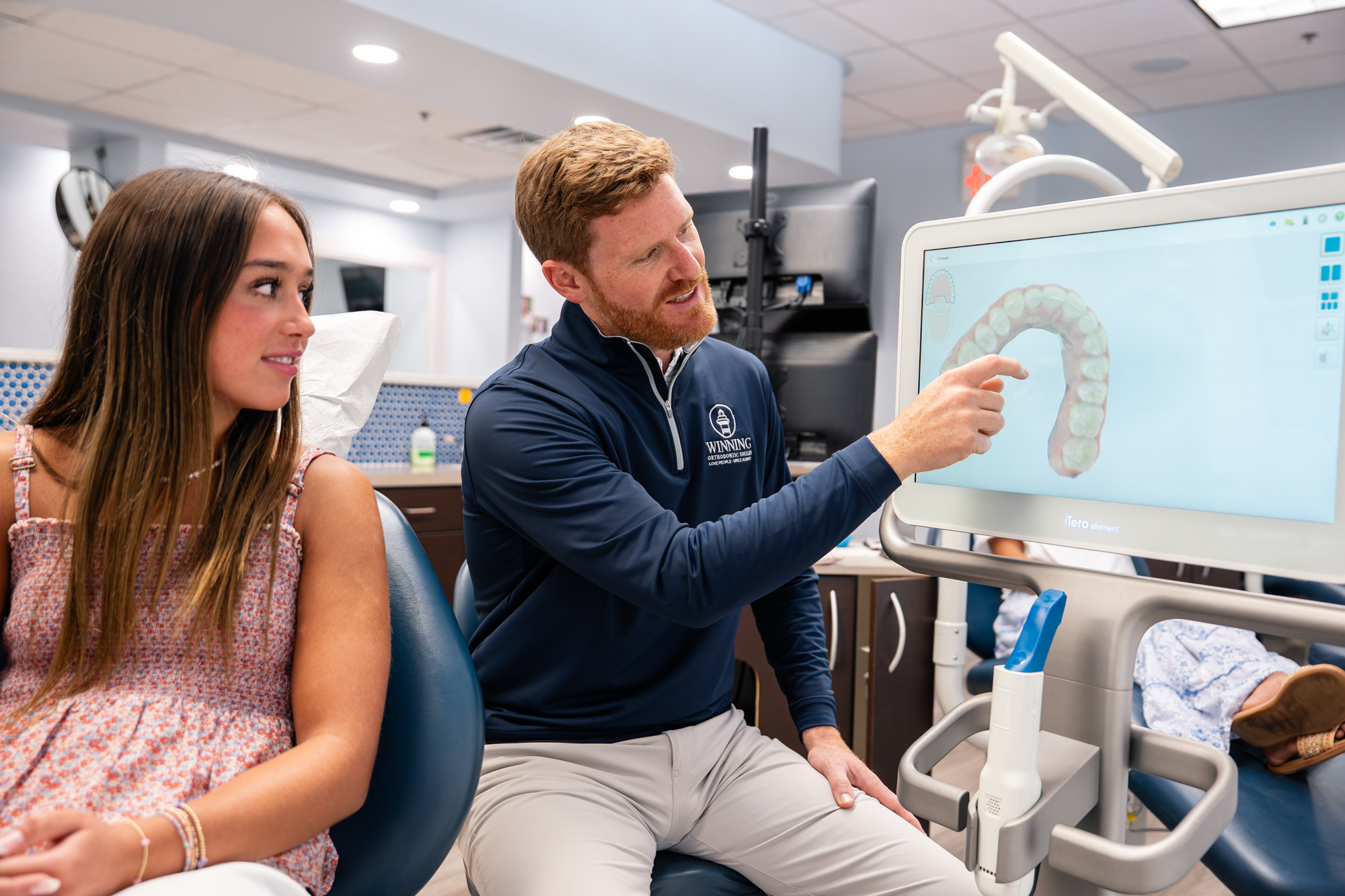
Your treatment begins with a digital scan that creates a 3D model of your teeth. From there, a custom set of aligners is fabricated. You’ll wear each tray for one to two weeks before switching to the next in the sequence. Check-ins at our office happen roughly every six to eight weeks so we can confirm progress.
Metal and Clear Braces
Braces use brackets bonded to each tooth and an archwire that’s threaded through them. Every four to eight weeks, you’ll visit one of our offices for an adjustment, where we tighten or replace the wire to keep teeth moving toward their target position.
Treatment Length
Most patients complete treatment in 12 to 24 months, depending on the complexity of the case. Mild crowding or spacing may finish on the shorter end, while bite corrections often take longer. Your orthodontist will give you a clearer timeframe during your complimentary consultation.
Benefits and Advantages of Each Treatment
Every option has real strengths. The right choice often comes down to what matters most to you, whether that’s appearance, predictability, or convenience.
Which Benefits Matter Most for Each Option?
Clear aligner benefits:
- Nearly invisible trays that fit into your daily life
- Removable for meals, brushing, and flossing
- No food restrictions during treatment
- Often fewer in-office appointments than braces
- Smooth plastic that’s comfortable against cheeks and lips
Metal braces benefits:
- Highly effective for complex and severe alignment issues
- Reliable for patients of all ages, including younger children
- Nothing to remember, since they work around the clock on their own
- Fun customization with colorful elastic bands (a hit with kids and teens)
- Exclusive Wild Smiles braces shaped like hearts, stars, and footballs. Turn correction into expression!
Clear braces benefits:
- Tooth-colored ceramic brackets blend in with natural enamel
- Fixed appliance, so there’s no compliance concern about wear time
- Works for many of the same cases as metal braces
- A great middle-ground for appearance-conscious teens and adults
How Does Each Option Affect Daily Oral Care?
Removable aligners also make oral hygiene easier than fixed braces because you can brush and floss your teeth normally. With braces, careful cleaning around brackets and wires takes a little more time, but our team will show you exactly how to keep your teeth healthy throughout treatment and achieve beautiful results.
Clear Aligners vs Metal Braces vs Clear Braces: Side-by-Side Comparison
When you compare these three options, the best choice often comes down to five factors: appearance, comfort, discipline, durability, and case complexity. Use the table below as a quick reference.
| Feature | Clear Aligners | Metal Braces | Clear Braces |
|---|---|---|---|
| Appearance | Most discreet, nearly invisible | Most visible | Moderately discreet, tooth-colored |
| Comfort | Smooth plastic, no brackets | May irritate cheeks and lips | May irritate cheeks and lips |
| Removable? | Yes, for eating and cleaning | No, fixed to teeth | No, fixed to teeth |
| Compliance needed | High (20 to 22 hours daily) | Low (always working) | Low (always working) |
| Food restrictions | None when trays are out | Yes, avoid sticky and hard foods | Yes, avoid sticky and hard foods |
| Durability | Trays replaced regularly | Very durable metal brackets | Ceramic can stain or chip more easily |
| Best for | Mild to moderate cases | Wide range, including complex | Mild to moderate cases |
| Office visits | Typically every 6 to 8 weeks | Typically every 4 to 8 weeks | Typically every 4 to 8 weeks |
Keep these points in mind:
- Discipline matters with clear aligners. If trays aren’t worn the recommended hours each day, treatment slows down. Teens and adults willing to commit usually see beautiful results.
- Ceramic brackets are slightly more fragile. Clear braces look great, but they can chip under heavy biting force more easily than metal.
- Metal braces handle the widest range of cases. For severe crowding, major bite correction, or rotated teeth, traditional braces are often the most efficient route.
How to Choose Between Clear Aligners and Braces
Most people arrive at this decision already leaning one way. Four questions will usually tell you whether that instinct is right.
- How much correction does your bite actually need? This is the question that overrides the other three. Mild crowding, small gaps, and minor bite issues are comfortably within what clear aligners handle. Severe crowding, significant rotation, and major bite correction give your orthodontist more precise control with fixed braces. If your case sits at the complex end, appearance preferences do not change the answer.
- Will the trays actually stay in? Aligners only work when they are in your mouth. Twenty to twenty-two hours a day sounds manageable until a busy week arrives. Some people never think about it. Others do genuinely better with something that works whether they remember it or not. Be honest here, because this is the single biggest reason aligner cases run long.
- How much does appearance matter day to day? If you present at work, teach, or have photos coming up, that weighs real. Clear aligners are the most discreet option and clear braces are a strong middle ground.
- What does your schedule look like? Aligner check-ins are usually a little further apart than brace adjustments. If you travel, commute, or are juggling a family calendar, that difference adds up over a year or two.
There is no wrong answer here, and no option is a compromise. All three finish with straight teeth and retainers to hold the result. What changes is how you get there. Bring your honest answers to these four questions to your consultation and the conversation gets a lot shorter.
Who Is a Good Candidate for Each Treatment?
The best treatment depends on your specific orthodontic needs, age, lifestyle, and how committed you are to following through on care instructions. Patients across our Beaufort, SC community choose different options for different reasons. Here’s how candidates usually break down:
- Clear aligners: Disciplined teens and adults with mild to moderate crowding, spacing, or bite issues who can commit to wearing trays 20 to 22 hours a day. Invisalign Teen includes compliance indicators to help parents track wear time.
- Metal braces: Patients with complex bite problems, severe crowding, or significant rotation. Metal braces are also a great choice for younger kids who’d love to pick their elastic colors at each visit, or for kids who want to try Wild Smiles shapes.
- Clear braces: Appearance-conscious teens and adults who need fixed treatment but want a more subtle look than metal brackets offer.
Age isn’t a barrier to treatment. Roughly one in four orthodontic patients today is an adult, and it’s never too late for you to have a healthy, straight, winning smile. Your friends and even your family won’t always know that you’re straightening your teeth, especially with aesthetic options like clear aligners or clear braces.
The only way to know for sure which treatment is right for you is an orthodontic exam. During your complimentary consultation, Dr. Travis Fiegle, Dr. Katie Solomon, or Dr. Gavin Fox will examine your teeth, review your goals, and recommend the option that best fits your case, giving each patient the winning smile that they deserve.
Frequently Asked Questions
Is Invisalign better than braces?
Neither option is universally better, and each suits different cases. Clear aligners are excellent for mild to moderate alignment issues and patients who want a discreet, removable option. Braces are often the better choice for complex bite correction or severe crowding because they give the orthodontist more precise control over tooth movement.
What is the difference between clear aligners and clear braces?
Clear aligners are removable plastic trays that you take out to eat and brush. Clear braces are fixed to your teeth like metal braces, just with tooth-colored ceramic brackets instead of stainless steel. Both are discreet, but only one comes out. That single difference drives most of the decision, since aligners depend on you wearing them and clear braces work on their own.
Are clear braces as effective as metal braces?
Yes, clear braces use the same proven mechanics as metal braces, which means they can correct most of the same alignment and bite issues. The main differences are appearance and durability. Ceramic brackets blend in with your natural tooth color but can be slightly more fragile than metal, so they’re often best for patients with mild to moderate cases.
How long does each treatment take?
Most orthodontic treatment takes 12 to 24 months, regardless of which option you choose. Mild cases sometimes finish in as little as six to twelve months, while complex bite corrections can take longer. Your orthodontist will give you a personalized timeframe after examining your teeth during your complimentary consultation.
Can you switch from clear aligners to braces during treatment?
Yes, and it happens more often than people expect. Sometimes a case turns out to need movements that are easier to control with fixed braces, and sometimes trays are not getting worn consistently enough to keep the plan on schedule. Switching is not a setback, and progress already made still counts. Your orthodontist will talk it through with you rather than surprise you with it.
Can adults get clear aligners or clear braces?
Absolutely. Adults make up a growing share of orthodontic patients, and both clear aligners and clear braces are popular aesthetic options for grown-ups who want to straighten their teeth without obvious metal brackets. With either one, you can straighten your teeth without disrupting your smile’s natural beauty.
Does insurance cover clear aligners and braces?
Many dental plans include an orthodontic benefit, and it usually applies the same way whether you choose aligners or braces. Coverage amounts and age limits vary quite a bit from plan to plan, so bring your insurance details to your consultation and our team will review your benefits with you before treatment begins.
Your smile. Our passion.